Mecklenburg County Dog Registration Information
Service Dogs and Emotional Support Animals in Mecklenburg, North Carolina
If you’re asking where do I register my dog in Mecklenburg County, North Carolina for my service dog or emotional support dog, the answer usually has two parts: (1) local pet licensing (often tied to rabies vaccination), and (2) understanding that service dog status and emotional support animal (ESA) status are legal/medical concepts—not a “license” you buy online.
Where to Register or License Your Dog in Mecklenburg County, North Carolina
In Mecklenburg County, pet licensing and rabies enforcement are typically handled locally through animal care & control and public health. Below are example official offices that residents commonly use for questions about an animal control dog license Mecklenburg County, North Carolina, rabies requirements, and local enforcement.
Official Offices (Examples)
| Office | Address | Phone | Hours | |
|---|---|---|---|---|
Charlotte-Mecklenburg Animal Care & Control (CMPD)Animal licensing / pet license renewals & local animal control services
|
8315 Byrum Drive Charlotte, NC 28217 |
704-336-7600 | Not listed | Not listed |
Mecklenburg County Public Health (Local Health Department)Rabies education, public health guidance, and coordination related to rabies control
|
249 Billingsley Road Charlotte, NC 28211 |
980-314-9400 | Not listed | Not listed |
Tip: If you’re unsure where to start, begin with Animal Care & Control for licensing questions and the local health department for rabies-control questions.
Overview of Dog Licensing in Mecklenburg County, North Carolina
What “registering your dog” usually means
When people search “where to register a dog in Mecklenburg County, North Carolina,” they’re usually referring to a local pet license (sometimes called a “pet license” or “city/county license tag”). A dog license is different from a microchip and different from a rabies tag your veterinarian issues after vaccination. In many places, the dog license process is closely connected to verifying that your dog’s rabies vaccination is current.
Who enforces licensing and rabies requirements
Enforcement and compliance are typically managed locally through animal control and in coordination with public health. In Mecklenburg County, that commonly means Animal Care & Control for licensing and field enforcement, and the local health department for public health guidance related to rabies exposure situations.
Do service dogs and emotional support animals need a license?
In most cases, yes: a service dog or emotional support animal is still a dog living in the community, so local rules about rabies vaccination and a dog license in Mecklenburg County, North Carolina generally still apply. The difference is that “service dog” and “ESA” describe legal status and housing/access rules—not a special animal control “registration” that replaces local licensing.
How Dog Licensing Works Locally in Mecklenburg County, North Carolina
Step 1: Get (and keep) rabies vaccination current
North Carolina rabies law requires owned dogs to be vaccinated against rabies by four months of age and kept current. If a veterinarian administers a rabies vaccine, the typical schedule is a booster one year later and then every three years thereafter when using a 3‑year licensed vaccine (your veterinarian will document the specific product and due date).
Step 2: Use proof of rabies vaccination to obtain/renew the local license
Local licensing is often issued annually and commonly requires proof of current rabies vaccination. Depending on where you live within Mecklenburg County (city limits vs. a town vs. unincorporated areas), the same local animal care & control system may handle licensing, or you may be directed to the relevant local office. If you have questions about an animal control dog license Mecklenburg County, North Carolina, contact Animal Care & Control using the office list above.
Step 3: Keep tags and documents organized
Many owners keep three items together: (1) the rabies certificate from the veterinarian, (2) the rabies tag (if issued), and (3) the local pet license tag (if issued). While tags help with identification, the most important “proof” is usually the written rabies vaccination certificate.
Local reminders for residents
- Licensing is local. Requirements and processes can vary by municipality, even within Mecklenburg County, North Carolina.
- “Registration” is not the same as “service dog status.” A dog can be licensed and vaccinated without being a service dog, and a service dog still needs to follow local health and licensing rules.
- Avoid third-party “registries.” Online “certifications” are not how local licensing or ADA service dog recognition works.
Service Dog Laws in Mecklenburg County, North Carolina
Service dog vs. pet license: what’s the difference?
A pet license (local licensing) is a local government program connected to responsible pet ownership—often including rabies compliance. A service dog, by contrast, is defined by federal disability law (the ADA) as a dog individually trained to do work or perform tasks for a person with a disability. Local licensing rules generally apply to all owned dogs, including service dogs, but the license does not turn a dog into a service dog.
Is service dog registration required?
Under the ADA, service animal registration is not required. North Carolina also has information about a voluntary service animal registration program at the state level; voluntary programs do not replace ADA rules and are not typically required for public access.
What businesses can ask (general guidance)
In many public-facing situations, staff generally may ask limited questions focused on whether the dog is required because of a disability and what work or task the dog is trained to perform. They generally cannot require you to show an ID card, vest, or “registration papers” as a condition of entry. Separate from that, local animal control can still enforce rabies and licensing rules.
Emotional Support Animal Rules in Mecklenburg County, North Carolina
An ESA is not the same as a service dog
An emotional support animal (ESA) provides comfort by its presence, but it is not the same as a service dog trained to perform specific tasks. This difference matters because ESAs generally do not have the same public-access rights under the ADA that service dogs do.
Do ESAs get registered with animal control?
Usually, no special “ESA registration” exists through animal control. In practice, an ESA is typically treated like any other owned dog for local purposes: it should be vaccinated against rabies as required by North Carolina law and may need a dog license in Mecklenburg County, North Carolina depending on local rules.
Housing is where ESA documentation is most common
ESA-related documentation most often comes up in housing contexts, where a housing provider may have an accommodation process. That’s separate from where to register a dog in Mecklenburg County, North Carolina for licensing and rabies compliance.
Frequently Asked Questions
Register A Dog In Other North Carolina Counties
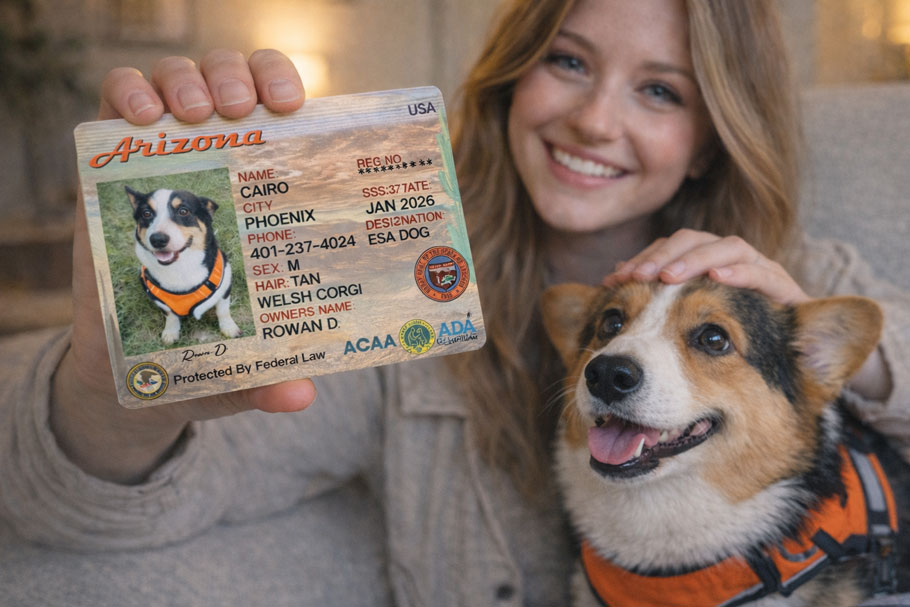
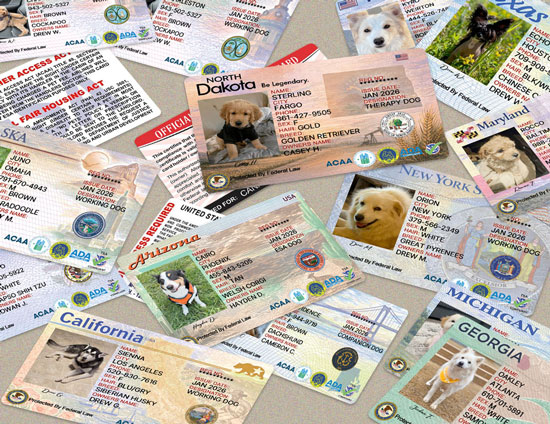
Select your county below to get started with your dog’s ID card. Requirements and license designs may vary by county, so choose your location to see the correct options and complete your pup’s registration.
- Alamance County Dog Registration
- Alexander County Dog Registration
- Alleghany County Dog Registration
- Anson County Dog Registration
- Ashe County Dog Registration
- Avery County Dog Registration
- Beaufort County Dog Registration
- Bertie County Dog Registration
- Bladen County Dog Registration
- Brunswick County Dog Registration
- Buncombe County Dog Registration
- Burke County Dog Registration
- Cabarrus County Dog Registration
- Caldwell County Dog Registration
- Camden County Dog Registration
- Carteret County Dog Registration
- Caswell County Dog Registration
- Catawba County Dog Registration
- Chatham County Dog Registration
- Cherokee County Dog Registration
- Chowan County Dog Registration
- Clay County Dog Registration
- Cleveland County Dog Registration
- Columbus County Dog Registration
- Craven County Dog Registration
- Cumberland County Dog Registration
- Currituck County Dog Registration
- Dare County Dog Registration
- Davidson County Dog Registration
- Davie County Dog Registration
- Duplin County Dog Registration
- Edgecombe County Dog Registration
- Forsyth County Dog Registration
- Franklin County Dog Registration
- Gaston County Dog Registration
- Gates County Dog Registration
- Graham County Dog Registration
- Granville County Dog Registration
- Greene County Dog Registration
- Guilford County Dog Registration
- Halifax County Dog Registration
- Harnett County Dog Registration
- Haywood County Dog Registration
- Henderson County Dog Registration
- Hertford County Dog Registration
- Hoke County Dog Registration
- Hyde County Dog Registration
- Iredell County Dog Registration
- Jackson County Dog Registration
- Johnston County Dog Registration
- Jones County Dog Registration
- Lee County Dog Registration
- Lenoir County Dog Registration
- Lincoln County Dog Registration
- Macon County Dog Registration
- Madison County Dog Registration
- Martin County Dog Registration
- McDowell County Dog Registration
- Mitchell County Dog Registration
- Montgomery County Dog Registration
- Moore County Dog Registration
- Nash County Dog Registration
- New Hanover County Dog Registration
- Northampton County Dog Registration
- Onslow County Dog Registration
- Orange County Dog Registration
- Pamlico County Dog Registration
- Pasquotank County Dog Registration
- Pender County Dog Registration
- Perquimans County Dog Registration
- Person County Dog Registration
- Pitt County Dog Registration
- Polk County Dog Registration
- Randolph County Dog Registration
- Richmond County Dog Registration
- Robeson County Dog Registration
- Rockingham County Dog Registration
- Rowan County Dog Registration
- Rutherford County Dog Registration
- Sampson County Dog Registration
- Scotland County Dog Registration
- Stanly County Dog Registration
- Stokes County Dog Registration
- Surry County Dog Registration
- Swain County Dog Registration
- Transylvania County Dog Registration
- Tyrrell County Dog Registration
- Union County Dog Registration
- Vance County Dog Registration
- Wake County Dog Registration
- Warren County Dog Registration
- Washington County Dog Registration
- Watauga County Dog Registration
- Wayne County Dog Registration
- Wilkes County Dog Registration
- Wilson County Dog Registration
- Yadkin County Dog Registration
- Yancey County Dog Registration